How Migration from Legacy IC to Oracle Fusion ICM Powers True Modernization
Updated: May 5
For decades, incentive compensation (IC) systems have played a crucial role in managing sales performance. But today, with high-growth, fast-changing businesses, what was once an operational function has now become a critical driver of revenue performance, employee motivation, and organizational agility.
Legacy systems such as spreadsheets, on-premise or heavily customized solutions struggle to keep pace with the complexity, agility, and transparency that modern enterprises demand.
Yet, studies show that 45% of companies have already initiated the migration from legacy IC systems within the last five years, driven by a combination of scalability challenges, compliance demands, and the rise of AI-driven innovation.
Enterprises that continue to depend on outdated systems risk higher costs, increased compliance risks, and disengaged sales teamsall while competitors accelerate ahead.
In contrast, Oracle Fusion Incentive Compensation (ICM) offers a transformative leap, turning IC complexities into a strategic driver of revenue growth.
.
The Hidden Costs of Legacy IC Systems
For organizations experiencing growth, diversification, or global expansion, legacy systems create significant roadblocks:
Scalability Issues: Older platforms struggle to handle increased data volumes, acquisitions, or expanding sales teams.
Performance Bottlenecks: Batch processes can take hours or even days delaying payouts and leaving sales reps frustrated.
Inflexibility: Highly customized systems make it difficult to roll out new plans or adapt to shifting business strategies.
Poor User Experience: Limited reporting and outdated interfaces prevent sales teams from tracking performance or resolving disputes efficiently.
High TCO: Hardware, IT resources, and manual intervention drive up costs.
Compliance Risks: As regulations such as SOX tighten, legacy systems may lack the security and auditability businesses need.
Slow Innovation: Without regular updates or access to AI-driven capabilities, organizations fall behind competitors already embracing modern tools.
It’s no surprise that nearly half of enterprises have initiated a move away from legacy IC systems in the past five years.
How Oracle Fusion ICM Redefines Incentive Compensation
Oracle Fusion ICM offers a cloud-first, future-ready solution purpose-built to solve these challenges. The benefits go far beyond “keeping the lights on”. They unlock entirely new possibilities for efficiency, compliance, and revenue growth:
Enhanced Scalability and Speed: From dozens to thousands of payees, Fusion IC scales seamlessly while dramatically cutting calculation times compared to legacy systems.
Lower Total Cost of Ownership: A subscription-based model eliminates costly infrastructure, manual processes, and IT overhead.
Built-in Security and Compliance: Out-of-the-box SOX compliance and enterprise-grade security mitigate risk for global organizations.
Continuous Innovation: Regular updates and AI-enabled features arrive without downtime, keeping businesses ahead of the curve.
Unified Sales Performance Management (SPM): Incentive compensation integrates tightly with planning, forecasting, and financial reconciliation providing a clear line of sight from strategy to payout.
Superior User Experience: Sales reps gain real-time visibility into earnings via mobile-friendly dashboards, reducing inquiries and disputes.
Vertical Integration: Oracle’s complete stack from database to applications delivers unmatched performance, data consistency, and reliability.
Legacy IC Limitations Vs. Oracle Fusion ICM
The contrast between legacy systems and Oracle Fusion ICM is stark. Where legacy platforms create rigidity and cost, Fusion ICM delivers agility and insight:
Feature | Legacy Systems | Oracle Fusion IC |
Architecture | On-premise, often outdated | SaaS-based, modern architecture |
Flexibility | Limited and rigid | Highly configurable and scalable |
User Experience | Complex UI | Intuitive, modern UI |
Data Management | Siloed, complex mapping | Centralized, streamlined data flow |
Reporting | Requires complex integrations | Simplifies integrations using modern APIs |
Customization | Heavy customization required | Lightweight, configuration-based |
Automation | Manual processes | Embedded automation |
TCO | High, due to infrastructure | Lower, subscription-based |
Innovation | Disruptive upgrades | Continuous enhancements |
AI/ML | Rare or non-existent | Built-in AI/ML tools |
Inside Oracle’s Own Fusion ICM Migration Journey
Oracle itself provides a powerful proof point. Managing 25,000 employees across 70 countries and two million monthly transactions, Oracle transitioned from a siloed EBS environment to Fusion ICM.The results were remarkable:
Zero missed payments during transition.
Unified global process replacing fragmented, regional workflows.
Orders-of-magnitude calculation runs faster compared to EBS.
Real-time reporting, eliminating manual Excel work.
8% reduction in sales inquiries to the comp team in year one.
Cost savings by retiring risky, expensive custom solutions.
The outcome? A transformational sales experience, with mobile dashboards replacing outdated reports and far greater visibility for leadership.
Key Considerations in Migrating IC from Legacy to Cloud
While the benefits of Oracle Fusion ICM are clear, a successful migration depends on careful preparation and execution. Incentive Compensation touches sales, finance, operations, and IT making it one of the most collaborative and sensitive enterprise functions. To ensure a smooth transition, organizations must focus on a few critical areas:
Data MigrationMigrating large volumes of historical and transactional data requires strong mapping, cleansing, and validation strategies. IC data also flows into downstream systems like CRM, finance, and data lakes, so precision is essential.
Customization & IntegrationLegacy systems often carry years of customizations. Not all of them belong in the cloud. Each must be evaluated for relevance, with opportunities to streamline processes or reassign functions to other business areas. Integrations with upstream and downstream systems must also be redesigned.
Change Management Incentive Compensation affects people’s pay, which makes stakeholder communication, user training, and adoption strategies crucial. Strong change management minimizes disruption and builds trust.
Rigorous TestingParallel runs, unit testing, and UAT are critical to ensure payout accuracy. Test scripts should be tied to specific business processes to validate both functionality and compliance.
Engaging Experienced PartnersIC is a highly specialized domain. Partnering with experts who understand both legacy platforms and Oracle Cloud ensures faster go-lives, accurate payouts, and minimized risk.
IDC research highlights that experienced service providers are critical to smooth migrations and accelerated ROI.
Salesdrive Technologies Proven 5-Step Approach to Successful Migration
Migrating Incentive Compensation is not a simple lift-and-shift exercise. It requires strategy, precision, and deep domain expertise. Organizations that succeed typically follow a structured roadmap and that’s where Salesdrive Technologies brings unmatched value.With over two decades of specialization in Oracle Incentive Compensation, Salesdrive Technologies has developed a proven five-phase methodology that minimizes disruption while accelerating ROI:
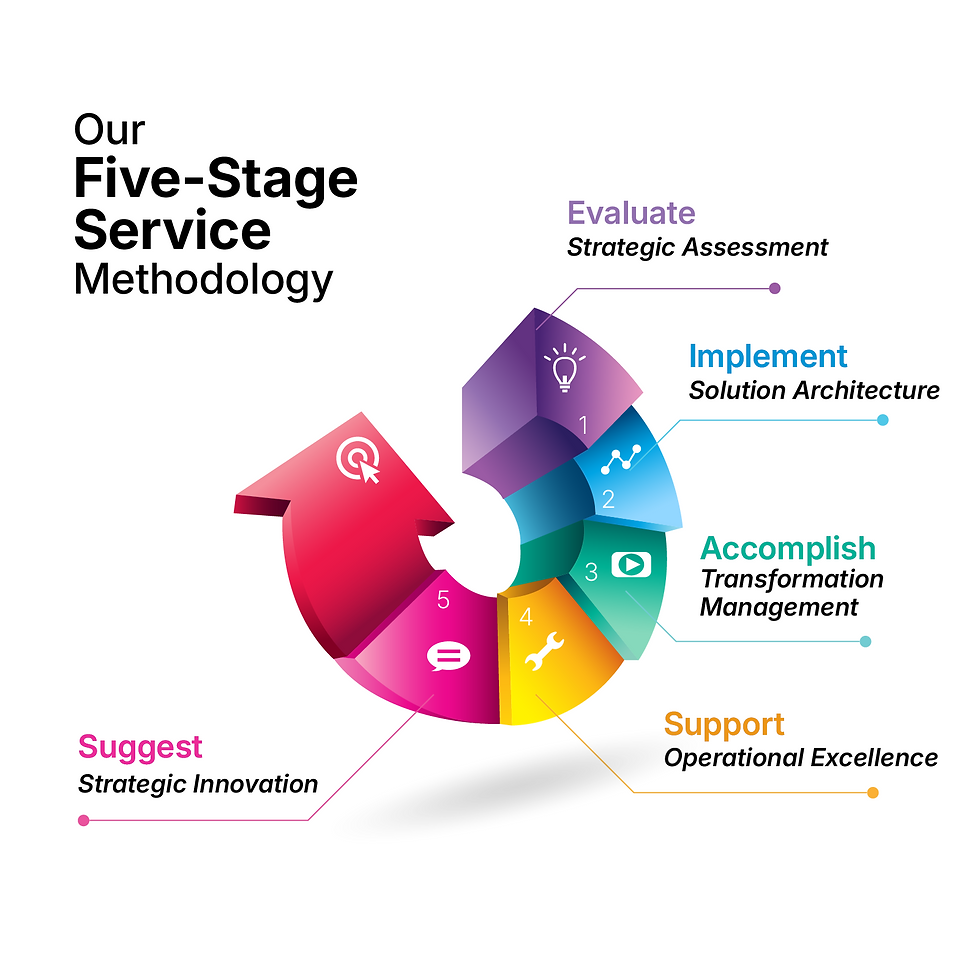
This approach has consistently delivered:
50% faster deployments compared to industry norms.
99.9% calculation accuracy, ensuring trust in payouts.
2.5x ROI on average, achieved within months of go-live.
By combining deep technical expertise with a focus on customer self-sufficiency, Salesdrive ensures that enterprises not only migrate successfully but also unlock the full potential of Oracle Fusion ICM.
The Future of Incentive Compensation
The future of IC is agile, intelligent, and human-centric. Modern organizations are moving towards:
Hyper-Personalized Plans – Tailored by role, skills, and contribution.
Agile, Outcome-Based Strategies – Frequently updated to align with evolving business goals.
Expansion Beyond Sales – Incentivizing all revenue-contributing roles.
Holistic Rewards – Blending monetary and non-monetary incentives with ESG and well-being initiatives.
AI-Powered Automation – Intelligent quota setting, equity audits, and incentive design.
Real-Time Transparency – Dashboards and predictive analytics for instant performance insights.
Yet, the human element remains central. Incentive compensation directly impacts livelihoods, and while AI enhances speed and insight, fairness and motivation will always require human judgment.
Conclusion: The Way Forward
Enterprises that modernize ICM today are already seeing faster payouts, fewer disputes, lower costs, and more motivated sales teams.But technology alone is not enough. The difference between a smooth, future-ready migration and a painful one lies in the right strategy and the right partner.Salesdrive Technologies is a leading provider of Oracle CX solutions, and trusted SI partners for Oracle Fusion ICM and Sales Performance Management (SPM) who bring unmatched expertise, a proven 5-step methodology, and a track record of delivering measurable ROI.For enterprises ready to take the leap, Salesdrive helps ensure the journey to Fusion ICM is faster, smarter, and built for the future.For more insights, visit us at www.salesdrivetech.com
Comments